The product includes the handoffs
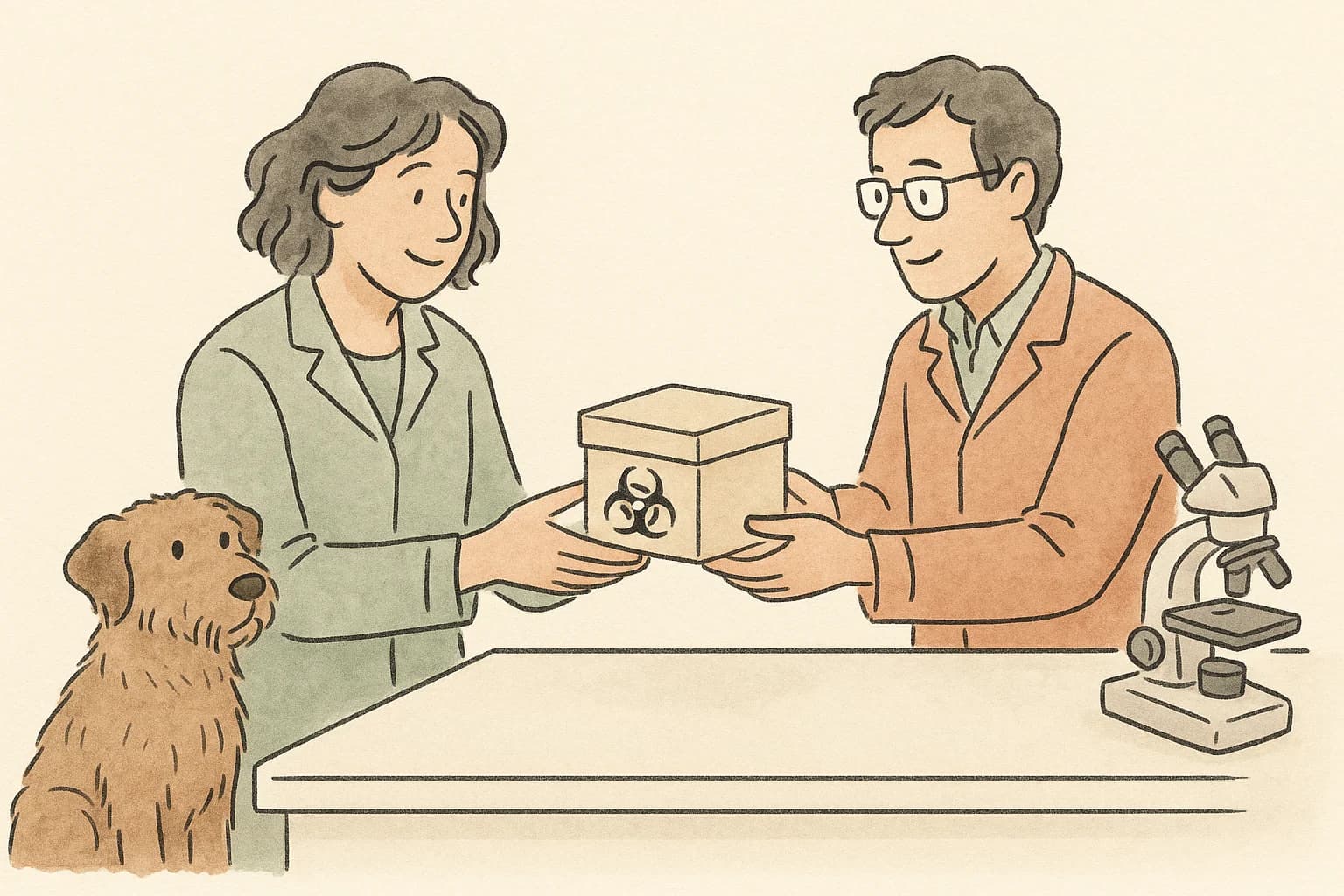
A personalized cancer vaccine requires more than a target-selection algorithm. It involves a clinician, suitable specimens, sequencing, computational interpretation, experimental evidence, manufacturing and follow-up. Every handoff can introduce delay or uncertainty.
N1 Therapeutics’ aim is to make personalized cancer immunotherapy more accessible, starting with our best friends: dogs. Neoantigen Retriever is the computational product inside that broader development path.
An earlier Project Rosie architecture document described a wide future platform. This adaptation separates that ambition from what the prototype demonstrated and from the partners and studies still needed.
Begin with a clinically useful question
The veterinarian brings the patient’s diagnosis, clinical history and specimen context. The sequencing partner turns suitable samples into molecular evidence. A reproducible computational workflow then evaluates tumour-specific changes and ranks candidate targets.
A useful output should explain the evidence for each candidate, the limits of the prediction and the next question for the laboratory. A ranked list is a handoff to specialist review and experiments.
Keep scientific execution reproducible
Scientific tools and their configurations should produce traceable outputs. A candidate list needs to retain reference versions, model assumptions, allele context and the evidence used in ranking.
An AI assistant can help explain reports and navigate the workflow. It should not replace deterministic scientific processing or turn missing evidence into a confident narrative. The original prototype deliberately separated explanatory assistance from critical manufacturing templates.
The marketing website is also separate from scientific execution. It explains the programme and helps collaborators find their place. It does not accept clinical records or execute the pipeline.
Give every partner a defined role
The collaboration model works when responsibilities and deliverables are explicit.
- Veterinary clinics: assess suitable cases, coordinate samples and provide clinical context.
- Sequencing laboratories: plan inputs, prepare libraries, produce data and document quality.
- Neoantigen Retriever: generate and explain prioritized computational candidates.
- Immunology laboratories or CROs: test binding, stability and biological response.
- mRNA-LNP teams: develop constructs, formulation, manufacturing and product quality.
- Clinical and monitoring teams: evaluate administration and follow-up within an authorized protocol.
Measure the entire path
A fast computational run does not establish a fast patient workflow. The end-to-end turnaround includes specimen preparation, sequencing, experiments, manufacturing, quality assessment and clinical coordination.
The same is true of affordability. Compute cost is only one component. Our development questions include total per-case cost, turnaround at each handoff and how many clinics can access qualified capabilities. These are objectives to measure, not savings already demonstrated.
A network before a distributed platform
The longer-term vision is repeatable infrastructure that more clinics can use. The first task is to make the workflow credible with a focused team, defined studies and partners capable of delivering each stage.
Bowen Li’s U of T lab and UBC’s RNA/Formulation Core are prospective mRNA-LNP options. Donnelly is a prospective sequencing collaborator. Wet-lab validation needs its own immunology laboratory or CRO. These capability discussions are not signed partnerships.
The platform becomes useful when it makes the science and operations easier to assess together. That is the work between a compelling prototype and a dependable patient-specific development pathway.
Sources and original work
Adapted by Shashank Padala for N1 Therapeutics from his original article dated April 21, 2026. Project Rosie remains the historical prototype; Neoantigen Retriever is the current computational product.